Honey Crisp vs. Golden Delicious Apples: Can you really compare the two?


I grew up comparing myself constantly with others, and I am not sure I had a choice (until I realized I had an option). I was in the middle of 2 sisters. We were each approximately 18 months apart. I was nothing spectacular; I was an average kid with an average upbringing. My older sister was pretty, had beautiful thick long hair, a star athlete – a forward on the soccer team & third baseman for the softball team, and ranked in the top 10 of her class at graduation. She had boyfriends. She also reminded me regularly how awesome she was!

My younger sister was the goalie on the soccer team and the catcher on the softball team. She also was diagnosed with type 1 diabetes as a freshman in high school, a discovery made only because of a near-death experience (this had a significant impact on me). I was close with my younger sister and very maternal; I probably cared for her as I wish my older sister cared for me.

I was frequently compared to my sisters (particularly my “perfect” older sister) by other parents, teachers, students, etc.  Naturally, I learned at a very young age to compare myself with others. In some ways, I think that built my desire to do better and achieve more. It set me on a path of “perfection” into my adulthood. And I gained a significant number of personal and professional accomplishments on that path. But I struggled internally for many years on that journey, specifically with anxiety, negative thoughts, and high standards. 

Someone Needs Therapy

Interestingly enough, despite all my inner chatter, I never sought therapy. But instead, the near breakdown of my relationship with my mother made me seek therapy in my 30’s. I gave birth to 2 girls in my early thirties, and I struggled to rationalize my relationship with my mom. I had ignored it for so long, but my girls’ birth intensified my need to solve the problem. So, I went to therapy, seeking an answer to that particular question.

My girls were and still are the greatest gifts I have given this world. Not for one second would I allow our relationship to evaporate into thin air. If I were mad at them, I would tell them. I’d make them talk to me if they were mad at me. I would be open, and I would listen. And, most importantly, I would apologize if they ever felt I hurt them.  My mother was unapologetically hurtful throughout my life. As I got older, I started to avoid the relationship; I knew it was better for my wellbeing. But it was still hard and hurtful not to have a relationship with my mom, especially now that I was a mom with daughters.

My therapist pushed me on my feelings, and the “why” question came up an awful lot. Eventually, it came back to my issue with being a perfectionist and being so hard on myself because this relationship was not working. I could begin to see my internal anxiousness driven by the problems I failed to solve or accomplishments I could not achieve.  She gave me reading material to help me understand my perfectionism and where it stemmed (constantly comparing myself to the “best” version of other people??!!??). The readings were helpful, and I appreciated that the pages were copies. That meant so many others felt this way, justified by the multiple copies she stored in her file cabinet.

The Four Agreements

She then instructed me to read a book. Unfortunately for her, the book ended my sessions with her. It opened my eyes to a new way of living and my eternal love of seeking, listening, and learning with the sole purpose of positive growth.  I wish someone had given me this book in my early twenties – The Four Agreements, by Don Miguel Ruiz (btw – over 13,000 reviews on Amazon). The book is super short, easy to read, and provided only four things to work on! Everyone should read this book and re-read it multiple times.

Agreement 1:  Be Impeccable With Your Word

The first agreement focuses on the significance of speaking with integrity and carefully choosing words before saying them aloud. Being impeccable with language means to take responsibility for one’s actions and remain without judgment against oneself and others.

Agreement 2:  Don’t Take Anything Personally

The second agreement provides readers with a way to deal with cruel treatment from others that they may experience in life. It advocates the importance of having a strong sense of self and not needing to rely on others’ opinions to be content and satisfied with their self-image. This agreement also allows readers to understand that each individual has a unique worldview that alters their perceptions and that the actions and beliefs of a person are a projection of their reality. 

Agreement 3:  Don’t Make Assumptions

The third agreement describes making assumptions, how it leads to suffering, and why individuals should not partake in making them. When one assumes what others are thinking, it can create stress and interpersonal conflict because the person believes their assumption represents the truth. 

Agreement 4:  Always Do Your Best

The fourth agreement allows readers to have better insight on achieving progress towards their goals in life. This agreement entails integrating the first three agreements into daily life and living to its full potential. It involves doing the best that one can individually manage, which varies from the different situations and circumstances that the individual may encounter.

Always do your Best. Period.

The 4th agreement hit home with my perfectionist mentality, but the 1st, 2nd, 3rd agreements make it so much easier to achieve the 4th agreement. The 4th agreement stresses that no one person is the same, and this fact often goes unsaid. Maybe it’s because we don’t want to be unique. I mean, we all want to be part of something, a team sport, a friend group, a company/team member, etc. 

Unfortunately, I found myself comparing myself to people I believed were the same as me.  My younger self would often compare myself to others in my organization or on my team at work. I’d wonder why or how one person was promoted over another. Or, how was someone picked for an interview or hired for a job over another.

Over time, I learned there were things I could control and things I just could not.  Despite similar backgrounds, groups, etc. each one of us is unique, living unique experiences. Although I may come into a job with the same degree, from the same school, and have the same experience, circumstances will differ. We are all unique, and our goal should be to do the best we can do in a given situation. This agreement also reminds us that “BEST” is not a vertical ascent every passing day; but that your best is different every day. Pure genius, right? I did not look at this as an excuse to slack on my dreams or accomplishments. But rather a way to live a life full of achievements without the chaos and anxiety within. 

How do you compare apples?

I wish my younger self understood this; I thank God I have these lessons to pass to my daughters.  My husband and I have raised our daughters as individuals and to respect one another’s accomplishments. Of course, one has a higher GPA than the other, and there are variances in other skills and traits.

But I tell them they cannot compare the outcomes because the experience (or variables) is so different. “Girls,” I say, “it’s like comparing Honey Crisp apples with Golden Delicious apples!”  They still hurt, and they still cry, and in the beginning, I wept inside as I would recite the apple story. Even though they still cry, and the apple story is repeated, I remain calm inside because I know it will stick with them. I know the story will sink in as they enter adulthood when it is probably needed even more!

Our girls…at the age I started reciting the apple story (teaching them not to compare themselves to each other, their friends, and cousins)


Unpacking Strategy

I think we almost divorced with this move!  We have moved before, a long time ago, from an apartment to a house with little stuff.  And, the house was just across town. We recently moved out of state from that home after 16 blissful years, raising our two daughters into teenagers.  Although I did a ton of sorting and pitching before the move date, somehow, we arrived in Atlanta with a lot more “stuff” than I thought.

I realized very quickly that my husband and I have very different unpacking styles!  But, as much as we fought, in the end, I found they complemented one another.  I like to unpack it ALL and place piles of “stuff” in the rooms where they belonged.  My husband wanted me to open one box at a time, putting away its contents immediately.  He hated the chaos I was creating.

Piles were everywhere, and he wanted the stuff put away. Don’t get me wrong, it was overwhelming, but I knew I could create an organized way of living and beautiful interior design through my approach.  But, my piles were messy and stressed him out.  He yelled and yelled and pushed me to put things away under his timeline.  At some point, I ignored him and just focused on my strategy and execution.  I zoned him out!  By the way, I was putting obvious things away in the right places (dishes, silverware, towels, etc.).  Things that were a little less obvious were in the infamous piles (random kitchen appliances, random sporting equipment, etc.)

But, to save our marriage, I knew I had to operate quicker and, in some instances, with tremendous uncertainty.  I could not remember what we had and I wanted to pick a location in the house that made the most sense.  I thought about how often we used things, how much we had of a category, and how each category complemented one another:

  • Frequency determined the location within a room
  • Amount determined the size of the location
  • Complementary determined what categories should be next to one another (for ease of finding stuff)

As I have done in all my professional roles, I kept an eye on the long term while focusing on immediate accomplishment.  And, those accomplishments are most often driven by a mix of long-term strategy and executing in uncertainty. On day 3, we were all unpacked with no more boxes, and everything was in its “permanent” place.  Warren pushed, and I did not sleep much, but it got done!   I believe that one day I will find something that was placed in an odd location, and I will move it, but I think 95% of our belongings are right where they should be.

During the unpacking process, I often pondered about our “thinking styles.” My husband likes to take a problem, solve it, and move on. I realized I enjoyed uncovering all possibilities regardless of how chaotic it makes me feel.  Because I know I can make an ordinary outcome something extraordinary!

Goodbye Sweet OH! I will never forget you!

Ohio Image

As a young teen, I never really thought about life outside of Long Island. I mean, did it really exist? In my opinion, New York City was the epicenter of the world! And I lived a 40-minute train ride from NYC! I was proud of my hometown (the same place Mariah Carey grew up) and enjoyed the fact that I could experience the city and the beaches that surrounded my town on Long Island.

There was no way any other place could be better! I remember a family trip to Florida when I was in 11th grade. My sisters and I met two boys from Ohio. I remember thinking, “where the heck is Ohio?” And FYI, I was smart, just an arrogant teen from N.Y. I also remember thinking that these boys probably lived in a house surrounded only by grass; no highways, malls, beaches, etc. They were nice boys, but I definitely could not comprehend what the heck it would be like to live in a random state like Ohio.

Fast forward many years…

I am now moving out of the state of Ohio. I have lived in Northeast, Ohio, for over 20 years – more time than I lived in New York! My final week here has been full of tears and the most intensive mindfulness I have ever experienced. I don’t want to forget anything about this place! Life is “easy” in Ohio; traffic does not exist (at least what I call traffic), there are no fences in yards (because, why do you need a fence?), and we have the Cuyahoga Valley National Park (move over Yellowstone!). And it spans from Cleveland all the way down to Akron!

parks

There is just no place in the U.S. where you can pass an Amish buggy on a country road, stop at the urban West Side Market for some pierogis and fresh sausage, then head to Lake Erie for a quick boat ride, before heading out for a hike or bike to a waterfall or ravine in Cuyahoga Valley!  All in one day! There is city life and country life, lake life, skiing, sports teams, fun urban neighborhoods & restaurants/bars (for the foodie), and the best intimate concert venues around!

And that young teen from Long Island…

I can picture a young girl from New York reading this and rolling her eyes as I did. Yes, New York has it all, and it’s more grandiose, but Ohio makes it so much more accessible. Typically, there is no stress getting from one place to another, and many events are financially feasible. Because of that, people are genuinely a little less anxious, a little less in a rush, and thankful for these experiences (aka “midwestern”). I think Ohio had an impact on my growth (just like my faith, family, friends, and career)!

There is such a thing as Divine Intervention…

I am going to miss Ohio, but I have experienced my fair share of challenges here, especially these last 4 years. These last 4 years have been the toughest of my life, and for many of my closest family members and friends. I’ve been hurt, and I have watched people so close to me hurt; in ways that simply break my heart. But, being in my little “Ohio” world has been, in some ways, my security blanket (and the only real “constant” in my life). Today, I dare to leave and succeed because of the past challenges I have overcome and the challenges I watched my family and friends overcome.

I leave with fond memories and some uneasiness as we start a life in a busy city like Atlanta. In my short visits to Atlanta, I have found the weather, culture, diversity, and the proximity to the lakes/mountains and southern towns awesomely appealing! Those are the new experiences I so much welcome! 

“I suppose it’s one thing to run away, but it’s another be pulled down the road by what feels like the hand of fate.”

–Andrew McMahon (one of my most favorite singers, piano players, entertainers, etc.)

To mask, or not to mask…

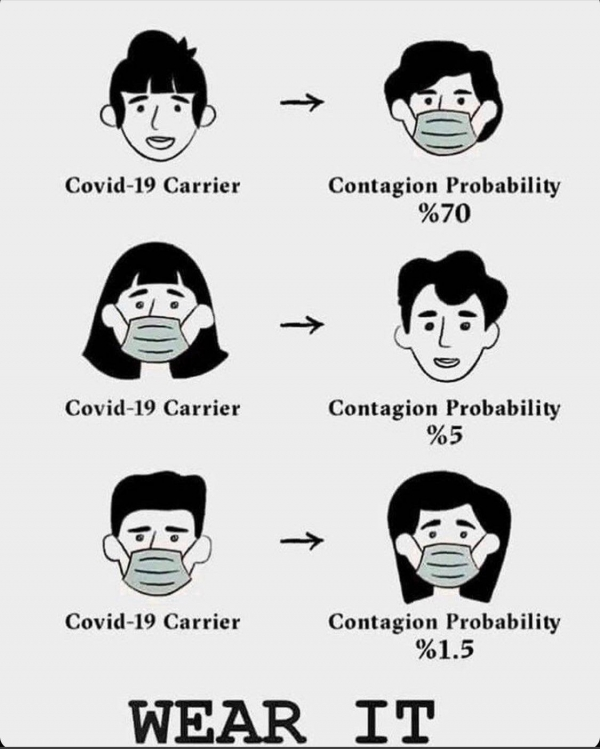
A mask will prevent the spread. A mask is inconvenient and uncomfortable.   Both are facts. But, one fact may be greater than the other. It is kind of like a math equation. What benefits the greater good… a mask or not a mask?

Mask > No Mask.    Simple math.

I hate breathing my bad breath, and the elastic pinches my ears when I wear my mask out in public. But I know, even though I may not really know, if I am infected, I am not contributing to the spread.

I know for some people it is difficult to be in isolation. And that is fair, you should be able to participate in life.  But it is not difficult to wear a mask or a bandanna on your face. It is unfair that you walk around potentially affecting others. If we all wear a mask for a few short months, we may spare lives. It is as simple as that.

So, I know, you may think you are OK to get COVID-19, and I am OK with that. But, I am not OK with you spreading it; because there are some people who may not be able to fight it. So, wear a mask, a bandanna, a turtle neck pulled past your nose when you are at retail. It really is a simple act.  I personally see you as selfish for not putting on that mask when I am at the food store, drug store, Target, mall store, or anywhere.  Please don’t put customer service or customers at risk because you are uncomfortable wearing a mask.  Just think of others.

It is not about you at this point, it is about protecting others.

COVID-19 can mean the gift of time for some…


I am one of the lucky ones. I only received the benefit from COVID-19. That benefit is the gift of time, time with my husband, time with my teens, and time to reflect on myself and my relationships with others. And when I say time, I mean, real quality time, not just minutes, hours, and days.

I would not have said I was lucky a year ago when I walked away from a high paying marketing job. I walked away because, for the first time in my career, my values contradicted the values of the organization. I spent four years accepting and ignoring the behavior around me, only to damage my friendships (by avoiding social activities) and my marriage and my family (by not being present). And I gained 20 pounds in “wine” weight ☹. Just being candid as embarrassing as it is to admit!

Although I left my job a year ago, my journey has just begun. It has been hard not “working” in marketing because I love what I do. And I could probably write a book about my experiences interviewing and networking (I have quite a few interesting stories to share)! So, it’s natural for me to think about the current environment with my marketing mindset, particularly the consumer-packaged-goods (CPG) industry.

I keep watching and reading about CPG companies (Campbells, Nestle, Smuckers, ConAgra, etc.) experiencing high double-digit growth during this pandemic. Those kinds of spikes don’t usually come without massive trade deals with Wal-Mart/Costco or competitive product recalls!   I think about the stress on the manufacturing, supply chain, and purchasing teams. I bet the meetings have shifted from generating demand to meeting demand. And, I bet it is difficult because CPGs have done such a phenomenal job efficiently planning factory shifts and managing the supply of raw materials & finished goods. Plus, add the extra precautions required because of COVID-19.

I turned my thoughts to the marketing personnel. And, I think, they are so lucky right now! They have the gift of time (unlike their operational peers) to think about how they want their brand to evolve as this pandemic comes to an end. Marketers run a business, and they have to answer to shareholders; that means focusing on the short term with only shallow thoughts and dreams for the future of the brand. This is a perfect time for marketers to dig deep into consumer insights and shape the future of the brand.

Despite my attempts at sharing consumer insights and commentary, many of my peers and managers hated our brand being called “emergency” or “back up.” I always made mention that our brand and products were “damn good back up” food. That was a critical insight coming from most consumers. I worked with an Agency that developed stories about this idea, and I was blown away with how they crafted an appropriate yet interesting story. But, in the end, it was not sexy, and we headed down the obvious “ingredient story” path that every other CPG was doing at that time.

I think it is incredible that consumers are turning to CPG products during this emergency and validating the role of these brands and products. That means they TRUST the products and trust is something that cannot be bought, only earned. CPGs earned this trust through years of consistency and safe products. How can taste, security, and safety be the foundation for an exciting story? Consumer trust allows CPG marketers to tell this story. How does this story apply to everyday life moments, small emergencies, etc. beyond this pandemic? Now is the time for marketers to put the work in and dive deep into consumer insights and connect them with the brand benefits in a meaningful way! The marketers at CPGs that can tell that story in the most relevant, intuitive way will win, and that is not LUCK.


Emotional Brand Benefit = Customer Experience?

I grew up marketing for big iconic food brands. We received the best training and spent a lot of time analyzing case studies in addition to our day jobs. I remember learning all about functional and emotional benefits, with a focus on building emotional benefits as the top priority. In my time as a consumer-packaged-goods (CPG) marketer, I learned that coming up with an emotional benefit was easy.  However, it was tough to align a relevant emotional benefit to the brand successfully.  I witnessed quite a bit of “over-reaching” and a desire to place brands in an emotional place in the consumer’s lives that they did not accept. This led to declines in yearly profit (sales down and ad costs up) and, in some cases, a damaged reputation.

We (including myself) were so focused on the brand benefits we often didn’t focus our attention on anything else. We may have lied to ourselves and said we concentrated on the entire consumer experience and had a well thought out integrated “path to purchase.” Which meant, any time the consumer saw advertising (TV, Print, Online, Instore, etc.) from our brands, all materials were consistent: the logo, the images, and so on. Hardly an experience.

But the world was changing, and consumers are expecting a different relationship with brands/services. It wasn’t until I left the brand/product industry and entered the service industry that I would learn of the term “omnichannel.” Obviously, if it only is a new buzz word for “path to purchase,” it will not work.  But, what if creating better relationships and experiences with consumers who buy food brands were strategically linked to the functional benefit of the brand. Maybe consumer experience could be the emotional benefit that a brand can deliver on… “this brand knows when to talk to me and how to talk to me,” “this brand knows where it fits in my life,” etc. I challenge all food brands that struggle with emotional brand benefits to focus on consumer journeys. And where and when they can be most relevant to have a conversation about their functional benefits. Maybe that’s the real emotional benefit?

Brown v Grant

I know, I am clearly very late to the party! I recently discovered podcasts during my sabbatical. A few months ago, I only had the energy to manage my day to day responsibilities. Now, with the gift of time, I have been able to really listen to others and discover myself. 

I often was familiar with the names of inspirational gurus, but during the most stressful times in my career, it was hard to find the time to read and learn about their message. My friend turned me on to Adam Grant. She experienced an awkward moment in her career and found relief in his message. I became familiar with Brene Brown this past year. They are both brilliant and leaders in their field.

Now, back in 2016, Grant disputed Brown’s recommendation to “just be yourself.” Brown said, “be authentic,” and Grant said, “be sincere.” Here’s my attempt to summarize what they believe the other one was saying (in layman’s terms):

  • Brown on Grant: “Grant believes you should change depending on the situation/person you are experiencing.” 
  • Grant on Brown: “Brown believes you should share every piece of yourself regardless of the situation/person you are experiencing.” 

They both speak with big words and profound thoughts (damn, I wish I could that). I read a few synopses from writers about the dispute, and they all believed that Brown and Grant were both right. I’d like to add, not only are they both correct, I think they were saying the same thing! And when you look up synonyms for authentic and sincere, they share the same words: genuine and true. 

Evolving a Brand’s Soul is Key to Survival

I grew fond of the Gap when I was in college. I loved the Gap. My love affair was simple to understand. I was a fad chaser in junior high and high school, just like 90% of my fellow Long Island classmates. I could not get enough: neon sweatshirts, stretch pants, acid wash jeans, parachute pants, ID shirts, Z Cavaricci, and Farlow jeans, Doc Martens, Benetton / Coca Cola rugby’s; the list goes on. But, in college, I was sick of the extreme fad chasing and quite honestly, looking like a high schooler. I wanted classic with style. I wanted quality but affordable, and the Gap was that for me. They had the perfect on-trend jeans, carefully infusing the right trend of fit and wash. The stores carried crisp, white, fitted shirts and lots of blazers. The mannequins were both classic yet stylish (I wanted to be them 😊). 

While reading the top news on the web a week ago, I read about the many retailers that were closing a significant number of stores. None of the stores were surprising. One store, in particular, had me reminiscing about the good ole days – the Gap. I read from a few sources what they interpreted as the demise of the Gap: 

  • Stuck in the “horrible middle” … not affordable like Old Navy and not premium like the Banana Republic. 
  • They did not connect with the millennial generation.
  • The horrible logo change (I would not dare call it a brand relaunch). 

Maybe all of the above is true. But I believe the simple reason for its lack of success is because the Gap did not evolve with the time.

Evolve is the keyword. A brand is born with a soul (in marketing terminology, it is called the brand essence). A soul doesn’t necessarily change, but it sure does evolve over time. Just like the human soul. To grow, one must truly understand its soul (aka brand essence) and identify ways the soul can remain relevant amidst changing times, attitudes, and significant shifts. Listening to consumers and reading / following trends is vital. 

 I read an article that stated: “The Gap provided customers with a uniform.” The word “uniform” is ugly, so I will elaborate. The “uniform” can be described as I mentioned above: simple, classic, on-trend (not on a fad). Unfortunately, the Gap did not evolve the “uniform” it just tried to be something for everyone. All of a sudden, I’d spot a cheaply made “fad” sweater with rhinestones in all the wrong places, off-trend jeans, athletic wear (where did this come from?), etc. The Gap lost its identity.

So, what do I wish to happen? What would still bring me through the doors today? 

    • Go back to classic and simple; but what’s relevant today (colors /cuts/necklines; etc.) Understand what classic means today.
    • Jeans are classic. Seek and discover on-trend jeans. The Gap let Levi’s come in and steal their “Jean equity.
    • Help customers pair the right amount of trend with a classic. Create an experience that helps customers add a “safe” amount of sass (think an orange loafer or a fringe earring to a classic outfit). Customers are looking to accessorize but don’t know how to do it (especially those classically, simple customers). Consider Stitch Fix, Trunk Club, etc. They pride themselves in providing an entire look to their customers. “Newer” fashion retailers immediately opened dedicating ample space to accessories. 

I dare all marketers to look at the soul of the brands they manage.  Is the brand evolving with the marketplace, or are products (within a brand) being launched based on trends exclusive of the brand’s soul? 

This is my vision of the evolution of the GAP…


Living in the “in between”

While exercising one day, I binged watched an hour of TED talks. Some were interesting, some were funny, and many were relatable.  I was intrigued by the TED talk by Suleika Jaouad, titled, “What almost dying taught me about living.”  I am so fascinated by people who come so close to death and get a second chance. I feel, for some reason, these people are the wisest humans on the planet and for sure know how to live life the right way.

I am always looking to others and how they approach life and the day to day chaos, considering my life is far from perfect.  I had an appreciation for her experience and her brutal honesty.  You don’t often find that kind of openness in a day where people dress up their Facebook pages and Instagram posts.  Heck, there are apps to help enhance your photos, creating a smaller waistline and bigger boobs for you.  It is amazingly touching to see or hear someone be so vulnerable and open.

Suleika said a lot of things that I just can’t seem to forget.  I was most impressed that she allowed her audience to compare her near-death experience with any trauma (physical, mental, etc.) that gets in the way of life’s happiness. This was essential because we all know life’s everyday problems cannot remotely be compared to fighting cancer.  She allowed me to relate without feeling guilty that my issues are not as severe as her battle.

Suleika began her talk by saying cancer totally transformed her life. She said she knew who she was now and her purpose in life. She said she started her day drinking a big glass of celery juice followed by 90 minutes of yoga and ended her evenings by writing down 50 things she is most grateful for in her life. She said she would fold that list into an origami crane and sail it out her window. My eyes grew wide as she spoke. I had to know how to live such a beautiful, grateful life and I couldn’t wait for her to tell me her secret.

NOT SO FAST…

Then she said, ”Are you kidding me, did you actually believe I do all those things?” Now, I really couldn’t wait to hear all about her journey. She talked about her 4-year fight against cancer. She was a warrior, and everyone around her believed she was a hero. Suleika had “cancer friends” and had a ton of support and beat cancer! There were celebrations and a sense of great accomplishment. Life changed, but she struggled with her new normal. She made it clear of how blessed she was to survive cancer, but she was scared and uneasy about the path ahead of her. After all, she survived; she must be destined to live a fulfilling life. Suleika wondered how she’d pick up where she’d left off before the cancer diagnosis.  

Feeling sad, lost, and at times feeling like she could barely breathe. The cancer fight had provided so much clarity in her life. When the battle was over, the clarity was gone. She struggled with her “re-entry” and felt bad about feeling the way she did after she got her life back, and her close friend lost the fight. Suleika spoke of the relationships she built with strangers who had reached out to her during her battle and took a road trip to meet a few of them. She learned something from each one of them, but there was a common theme thread among all their stories. She told her audience that the road trip didn’t fully heal her, “but that is OK.”

That simple statement was the answer (for me). 

She said the divide between “sick” and “well” is very small, and we travel back and forth, spending most of our life between the two. We are in constant dissatisfaction trying to get to the perfect state. But, whatever trauma we suffer or interruption in life, we must live within that chaos and mess. In those times, we need to lean on the things that do bring us happiness (a simple walk outdoors will do). We continue to live and breathe and take in all the moments. We don’t stop living or just “go through the motions” until we are past the mess. If we did that, we would be “going through the motions” for half our lifetime, missing out on life. Suleika concludes her story by telling us the real hero is the one who can live and be alive in the in-between and in life’s chaos. 

*Sulieka’s philosophy reminded me of my favorite book, The Untethered Soul, written by Michael A. Singer. I read that book when I feel stuck to remind myself to keep living.

I spy…Mindfulness

A few years back, I enrolled in a yoga teacher training program. I was eager to get limber and attempt all the “bendy moves” I so desperately wanted to show off to my friends. Little did I realize the program was more mentally transformative than physical. From a physical standpoint, I walked away learning what it felt like to be in perfect alignment for all yoga moves and in everyday life positions (including sitting and eating a donut). I have yet to be able to succeed as far as the fancy moves go.

All kidding aside, the program started me on a mental exploration. I’ve learned a lot about myself and continue to do so. One particular subject near and dear to my heart is mindfulness. It’s easy to associate mindfulness as a concept from the study of meditation. But mindfulness is more than an aspect of meditation. Being mindful is a way of life!

In the spirit of a new season, a busy Fall, and “back to school” time, I have a mindfulness story to share and possibly challenge you to take on. I can’t tell you how many times while driving to work or from work that I had no perception or awareness of what happened in between the route. I am sure many people can relate to.

My mind was always busy. Sometimes very busy with subconscious “junk.” I remember my yoga teacher assigning us homework in mindfulness. At first, I had no appreciation for it. I immediately began to moan about not having the time for homework in addition to my kids’ activities and my job. But, like any good yogi, I pushed that negative thought out of my head and accepted the challenge. Our assignments were to spend each day for one week, being mindful and fully aware of our surroundings. So, I started day 1 on my morning commute to work. I opened my mind entirely in search of something I hadn’t seen before (yet was always there) on my daily commute. And I had a wonderfully silly a-ha moment. 

Now, you may think I am crazy for noticing a small detail on the green highway signs, but I was extremely impressed with myself. I discovered something new, and I’d never seen in all my years driving on 271 or any highway in the US. I looked at the green highway signs as I drove and was amazed by their simple beauty, dare I say elegance. I specifically was impressed with their curved edges, perfectly die-cut. I thought to myself that these simple, yet beautiful signs seem inefficient to make, wasting a lot of material (the corner pieces). As I looked closer, I could see the corners of the signs were not die-cut. The signs were perfect squares and rectangles. The white borderline was designed with curved corners creating the illusion that the sign had curved edges. I felt better knowing the Department of Transportation is being smart about managing costs and silly for never recognizing the actual shape of the signs.

If I had missed something so simple like the shape of the green highway signs, what else could I be missing? I thought about all the times (in personal and business relationships & projects) I have let the “junk” get in the way. I choose to be mindful and take deep breathes to remain mindful during work and play. Imagine the possibilities if we were 100% mindful all the time?